Everyman Script Analysis
Everyman was a morality
play that came about in 1530 and was written by an anonymous writer. Morality plays were popular in 15th and 16th
century Europe, the most popular being Everyman. They used allegorical
stories to teach a moral message, underpinned by Christian teachings. The
characters personified abstract qualities of good and evil, ending in an
engagement in a battle to win the soul of the 'mankind' figure.
Everyman has a reckoning
of good and evil. It is used to count the good and bad deeds done by Everyman
to determine if he’s going to Heaven or Hell.
Everyman bargains with
Death to allow him to bring a companion with him to death. Everyman has
all these sins, that he thought were friends, turning out to not be friends
at all as he searches for a companion to go with him to death, and to hopefully
end up with God in heaven. Good Deeds is the only good soul that is willing to
die with Everyman to get to heaven with a companion, but she is not healthy
enough to do so. Knowledge is good enough to offer to follow Everyman with him to death, but would not cross over to death herself. Everyone else just doesn’t want to do it, even though they are
healthy enough, because they are worried more about self preservation than
helping Everyman.
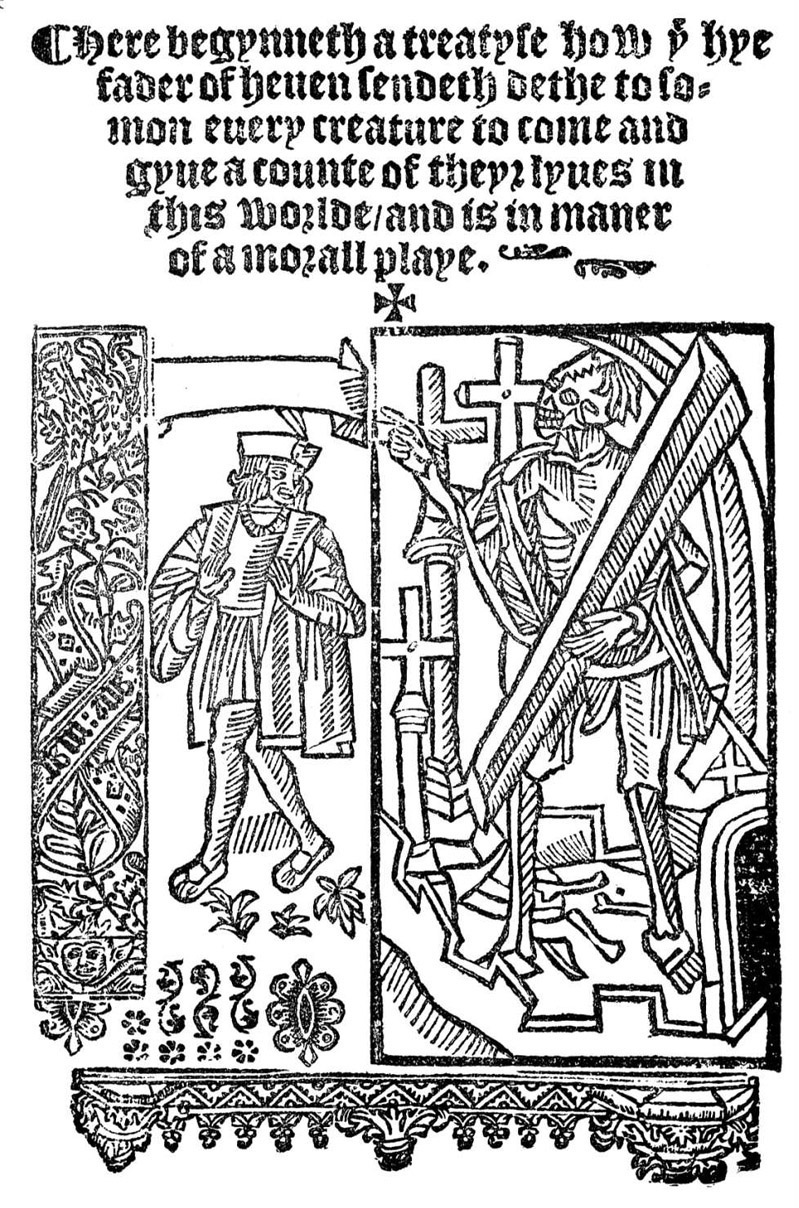
Everyman is essentially
good and evil, put on a ledger, to determine if someone deserves heaven or
hell. In Everyman’s case, he didn’t pay attention to Good Deeds as much as he
should have. Instead, he focused on Goods, thinking that materialistic things
would buy him whatever he wanted. But when he sees the value of Good Deeds he
tries his best to do more Good Deeds and listen to Knowledge and not be so focused on Goods, Five-Wits, Fellowship, Beauty, Kindred, and Strength.
Everyman is structured to
have a complete and continuous pattern, so every time a sin leaves him it moves
right on to the next, and even when he finds Good Deeds it does not break up
the flow of the play. The play is a one act play so there is no intermission or
reason for pause between any acts.


Comments
Post a Comment